Seasons
The Year Round in Central Vermont
Central Vermont's calendar is agricultural and civic rather than commercial, and it repeats. Anyone who spends a year here learns the shape of it quickly: town meeting, sugaring, mud, planting, fairs, foliage, hunting, the holidays, and then the long white middle of winter when the community suppers start again.
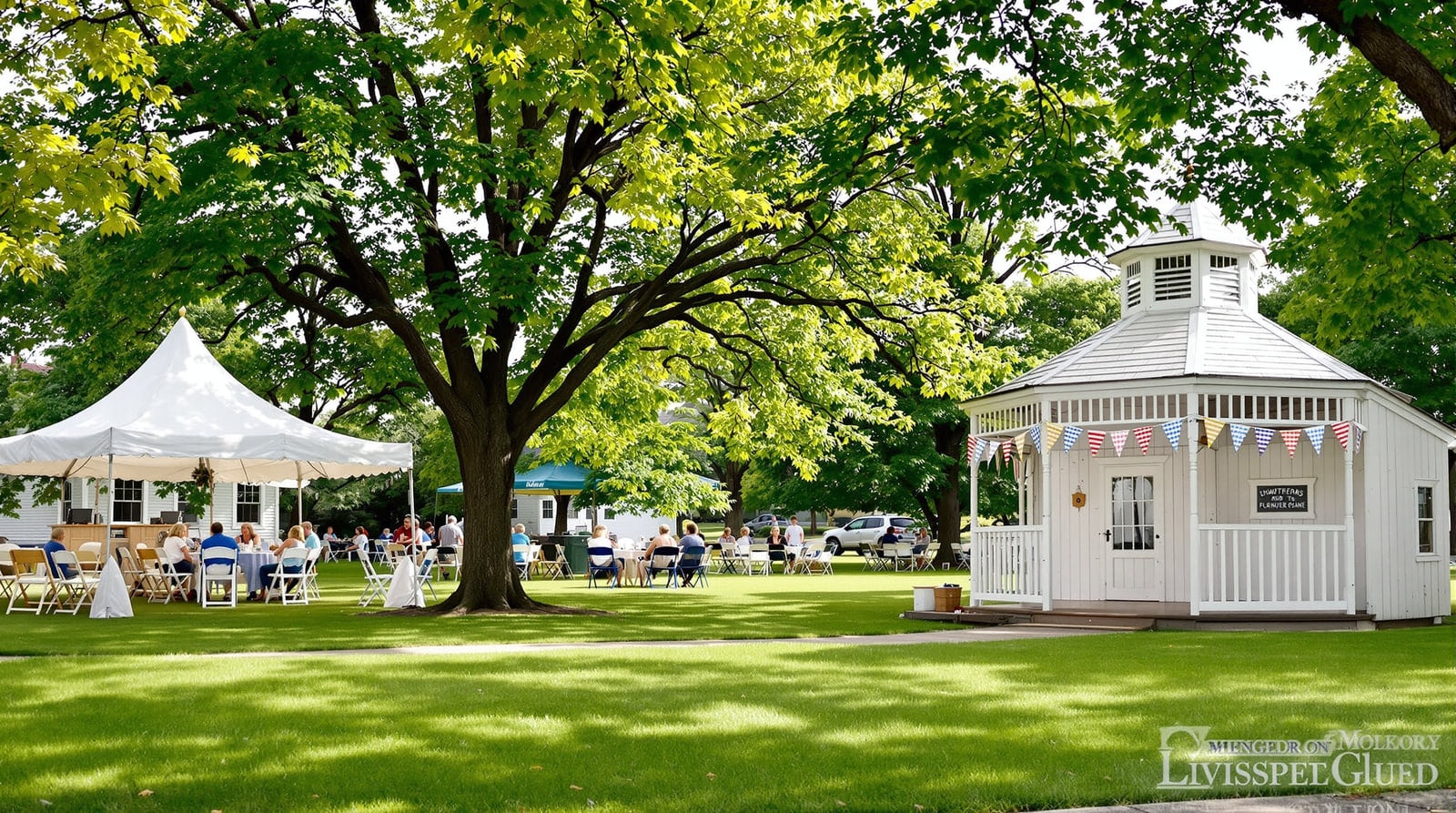
This page describes the pattern rather than listing dates. Current schedules are posted on village store noticeboards, in the town libraries and in the local papers, which remain the most reliable sources.
Late winter and spring
Town meeting, on the first Tuesday of March, is the region's defining civic event and one of the last places in the United States where a whole community sits in a room and votes on its own budget line by line. Meetings run from morning into the afternoon, there is a lunch put on by the church or the school, and the arguments are real. Visitors are generally welcome to observe; the meeting belongs to the voters.
Sugaring runs from late February into early April, and in the hill towns it is genuinely the busiest season of the year. Open sugarhouse weekends have been a fixture for decades. See sugaring.
Mud season — April into early May — is the region's quiet month. A good deal closes. It is also when the town libraries and community halls run their winter-project programmes, and when the maple festivals happen.
Late spring brings plant sales, library book sales, the first farmers markets and the start of the outdoor season proper.
Summer
Independence Day parades are the region's most-attended events, and every town of any size runs one. Small-town Vermont takes the parade seriously: fire apparatus, tractors, the school band, and a crowd that arrives two hours early with folding chairs.
Band concerts on the village green run weekly through the summer in several towns, from bandstands that in some cases were built in the 1870s and 1880s. They are free, they are unhurried, and they are one of the few nineteenth-century institutions here still operating exactly as designed.
Agricultural fairs and field days fill July and August: livestock judging, horse and ox pulling, tractor pulls, 4-H exhibits, a midway and a great deal of fried food. They are the direct descendants of the county agricultural societies of the 1840s and are still, in the hill towns, the year's social peak. Fairs and field days are overseen statewide by the Vermont Agency of Agriculture, Food and Markets.
Arts festivals. The Mad River Valley has for many years run a multi-day summer arts festival across the valley towns — music, performing and visual arts, cultural-history tours, outdoor events, workshops and demonstrations. Barre's heritage festival, first held over two days in July 1978 and revived periodically since, closes the downtown and builds a street fair around the city's twelve immigrant nationalities: the food is authentic, the shop windows fill with cultural displays, and the whole thing is a direct product of the ethnic-studies project described in the town histories.
Craft fairs, studio tours and church fairs run throughout; see the arts guide and country stores and craft.
Autumn
Foliage dominates the first three weeks of October, and it is the region's busiest travel period by a wide margin. See the foliage page for timing and for the standing warning about rooms.
Harvest. Apple picking and cider pressing from September, harvest suppers in church halls and granges, and the last farmers markets of the year.
Hunting season reshapes the whole rural calendar from October into December — archery, then rifle season for deer around the middle of November, when a good many hill-town businesses simply work around it. Walkers should wear blaze orange in the woods through the season.
Hallowe'en and harvest festivals in the villages, generally organised by the school or the fire department.
Winter
Holiday season. Tree lightings on the greens, craft fairs in the town halls, church concerts, and a run of school and community productions. Montpelier's downtown at this time of year is worth a special trip.
Winter carnivals in the ski towns from January, along with the racing calendar in the Mad River Valley.
Community suppers — church, grange, fire department and school — run right through the cold months and are the most characteristic Vermont meal available. See food and dining.
Contra dances, concert series and community theatre fill the winter evenings, mostly in nineteenth-century halls, and the Barre opera house programmes through the whole season. Much of this activity is supported statewide by the Vermont Arts Council.
The rhythm underneath
What connects all of it is that these are participatory events rather than spectator ones. The fair is judged by the people who raised the animals, the supper is cooked by the people eating it, the parade is composed of the town's own equipment, and the town meeting is the town governing itself. That is the most durable thing about the Central Vermont calendar, and it is the reason the same events have been running for a hundred and fifty years.
References
- Vermont Arts Council — Supports many of the region's festivals and arts programmes.
- Vermont Agency of Agriculture, Food and Markets — Oversees the state's agricultural fairs and field days.