The Region
Lodging in Central Vermont
Central Vermont has never had much hotel capacity and has never needed it. What the region has instead is a long-established stock of country inns, farmhouse bed and breakfasts, cabins and ski lodges — most of them small, most of them in nineteenth-century buildings, and collectively not very large. This page describes the types and the seasons. It carries no listings, rates or booking information.
The types
The country inn
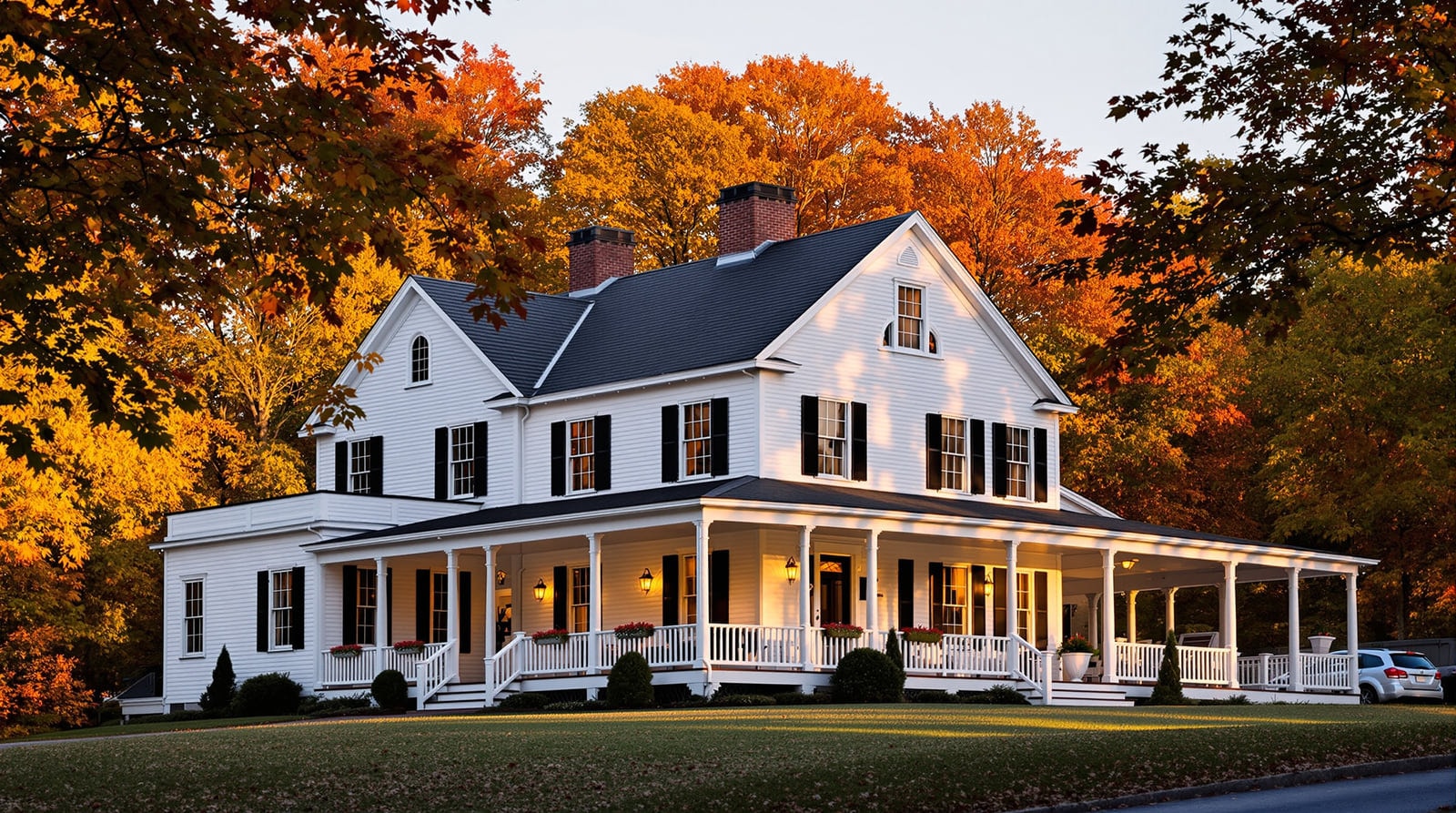
The region's characteristic lodging: a clapboard house of the 1820s to 1880s, a handful of rooms, a fireplace, and historically a dining room serving a single set menu to guests and to anyone else who booked. Inns cluster in the Mad River Valley, along the older through routes, and in the hill towns near the ski areas. The good ones are effectively small museums of Vermont domestic architecture that you can sleep in.
The farmhouse bed and breakfast
A working or former farm with two or three guest rooms, run by the family. Breakfast is likely to involve the farm's own eggs and syrup. This is the region's most numerous type of lodging and its best value, and it puts you on a dirt road with a view rather than on a main route.
Cabins and camps
Vermont's word for a holiday cottage is "camp", and the region has plenty — log cabins near the ponds and reservoirs, hunting camps in the hill towns, and purpose-built rental cabins. Self-catering, often seasonal, and frequently without much in the way of mobile signal, which for many people is the point.
Ski lodges and valley accommodation
The Mad River Valley's winter economy supports lodges of a kind found nowhere else in the region: bunk rooms, drying rooms, a bar and a large fireplace, built between the 1940s and the 1970s when the ski areas were young. Several have been in continuous operation since.
Motels and conventional hotels
Concentrated where the interstate meets the region — near Berlin, Barre and Waterbury. Functional rather than characterful, and the reliable fallback when the inns are full.
Camping
State park campgrounds sit on the reservoir and forest land north of Montpelier and above Waterbury, with tent sites, lean-tos and in some places cabins. Private campgrounds fill in around them. Backcountry overnight sites and shelters along the Long Trail ridge are maintained separately — see outdoor recreation. Current season and reservation information for the public sites is published by Vermont State Parks and the Vermont Department of Forests, Parks and Recreation.
Where to base yourself
- Montpelier — best for walking, eating and the historical sites, and the shortest drive to almost everything.
- Barre and the granite hills — best for the industrial heritage and Hope Cemetery.
- The Mad River Valley — best for skiing, ridge hiking and the mountains generally, but a half-hour further from the capital's history.
- Waterbury — best for the reservoir, the state forest and the Route 100 corridor.
- The northern hill towns — quietest, cheapest, prettiest, and furthest from anything if the weather turns.
The seasons, and the one that catches people out
Foliage is the problem. Every year hundreds of visitors race from town to town looking for a room, and every year some of them sleep in the car. Weekends in the first two weeks of October may be spoken for months in advance. The advice that has held for decades: reserve well ahead, or secure a weekday room very early in the day; and if rooms are short, concentrate on locations outside the larger towns, where capacity holds up better. Find the room first and then travel the countryside — the colour will be all around you wherever you sleep. See the foliage page.
Winter is busy in the Mad River Valley and quiet everywhere else, and school holiday weeks are the peak. Summer is comfortable and rarely full. Mud season — April into early May — and November are the two genuinely quiet stretches, when a good deal of the region's lodging simply closes; it is the cheapest time to come and the hardest to find anything open.
Practical notes
- Small inns and bed and breakfasts often have minimum stays at peak weekends and may not take single-night bookings in October.
- A great many properties are on unpaved roads. In winter and mud season, ask about access before you book.
- Not every historic building has step-free access, and few have lifts. Check directly if it matters.
- Mobile coverage in the hill towns is patchy to absent, and some camps have no landline either.
- Breakfast is usually included at inns and bed and breakfasts and usually is not at motels — which, given what breakfast means here, is worth factoring in.
References
- Vermont State Parks — Runs the region's public campgrounds and cabins.
- Vermont Department of Forests, Parks and Recreation — Manages the state forest land where the campgrounds sit.