The Region
Food and Dining in Central Vermont
Central Vermont ate locally for two hundred years because there was no alternative, and then found that the habit had become fashionable. This page is about what the region grows, makes and eats. It carries no restaurant listings — the food itself is the interesting part.
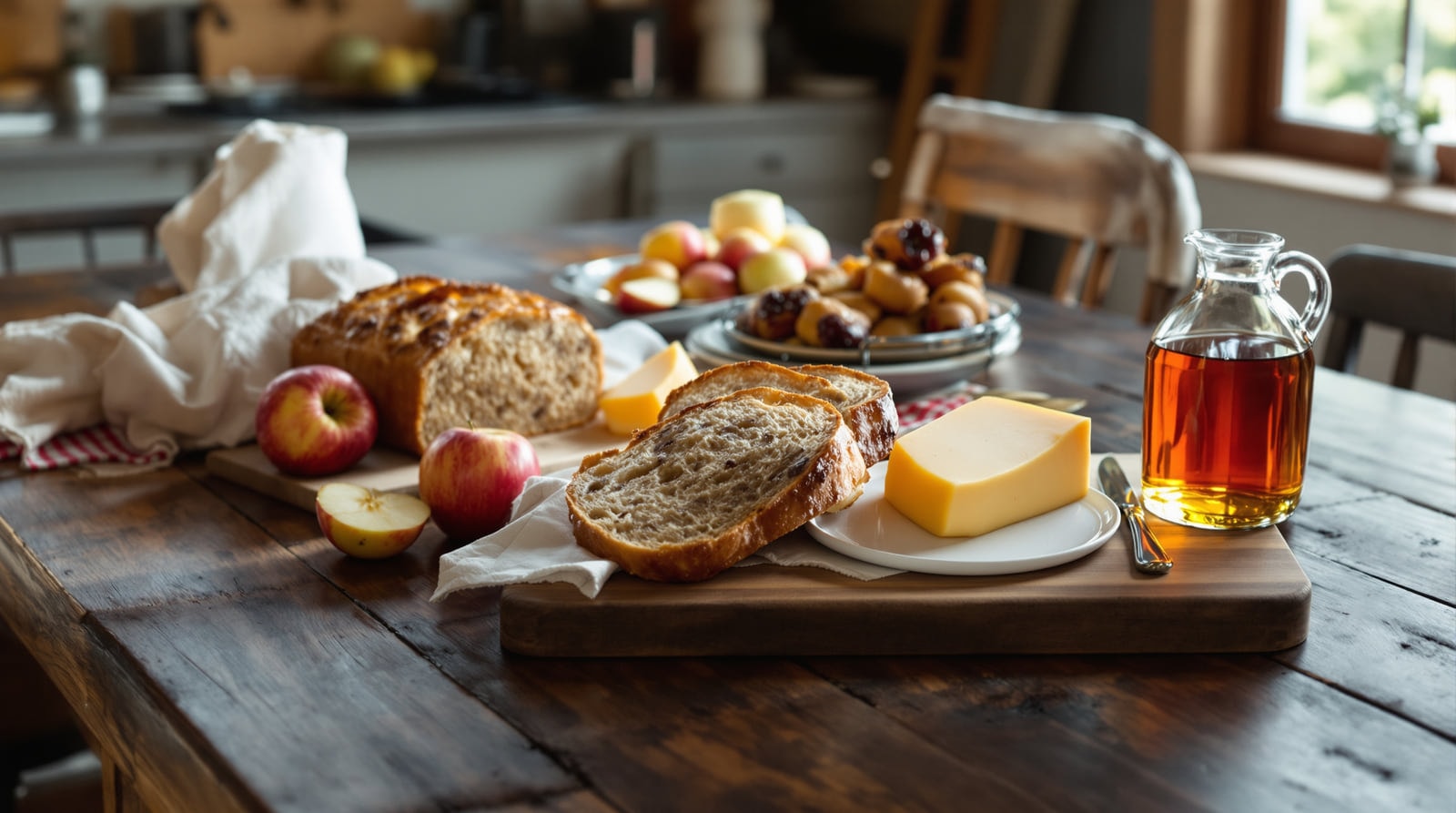
The raw material
The regional larder is short and very good.
- Cheddar. The hill-town creameries have been making sharp, dry, crumbly cheddar for well over a century, and the co-operative model that kept those farms alive is described on Vermont products. Aged cheddar with a good apple is the regional plate.
- Maple. Not a dessert ingredient here so much as a general-purpose sweetener: on porridge, in baked beans, glazing a ham, cut into cider, boiled to candy. See sugaring.
- Apples and cider. Hill orchards, autumn pressing, sweet cider by the gallon and a long-standing hard cider tradition that has been thoroughly revived.
- Dairy generally. Butter, cream, yogurt and increasingly good farmstead cheeses beyond cheddar.
- Meat and game. Beef and lamb from hill pasture, pork raised on dairy whey, and a serious hunting tradition — venison is a household staple in the hill towns, not an exotic.
- Cold-climate vegetables. Root crops, brassicas, squash and sweetcorn, with a short intense season and a long storage one. The root cellar is still a piece of working infrastructure here.
- Bread and grain. A small revival of Vermont-grown grain and stone milling supports a handful of genuinely good bakeries.
Regional dishes
Vermont cooking is plain, and the good version of it is very good indeed.
- Baked beans, slow-cooked with salt pork and maple, traditionally Saturday night with brown bread.
- Cheddar with apple pie — not a novelty but the standard way to serve it. A slice of sharp cheddar melted on top or set beside.
- Sugar on snow, with a raised doughnut and a dill pickle, in late March. Explained on the sugaring page.
- Cider doughnuts, made at the mill, eaten hot in the car park.
- Boiled dinner, and the corned beef hash that follows it the next morning.
- Maple cream and maple candy, both harder to make well than they look.
Where people actually eat
The region's eating places fall into a handful of recognisable types, and knowing which is which is most of what a visitor needs.
The diner and the lunch counter. Barre and Montpelier both keep working-day breakfast places that open early for the granite sheds and the state offices. Coffee, eggs, corned beef hash, pie. These are the region's most reliable meal.
The village store deli. Sandwiches made behind the counter, soup in winter, and a table by the window. Often the only lunch for fifteen miles — see country stores.
The capital's restaurants. Montpelier supports an unusual concentration of serious cooking for a town of its size, partly because of the legislature and partly because of a long-established professional culinary school that has trained cooks in the town for decades and left a great many of them there.
Valley and resort dining. The Mad River Valley's winter economy supports restaurants that would not otherwise exist in towns of that size, and they follow the ski season closely.
The inn dining room. Historically the region's fine dining: a set menu, a fireplace and whatever the kitchen garden produced. See lodging.
The community supper. Church, grange, fire department and school suppers run through the year and are the most Vermont meal available — long tables, roast chicken or baked ham, a table of pies made by whoever brought them, and a fixed price that has gone up very slowly. They are advertised on store noticeboards and in the local paper, and they are open to anyone.
The seasons on the plate
- Late winter: sugar on snow, maple everything, the last of the root cellar.
- Spring: fiddleheads from the riverbanks, ramps, the first greens, rhubarb.
- Summer: berries, sweetcorn from a roadside stand, tomatoes for six weeks only.
- Autumn: apples, cider, squash, venison, and the agricultural fairs.
- Winter: stored roots, preserved everything, cheddar, and the community supper season.
The fairs and suppers are listed under the year round.
Farm to table before it had a name
The current label was attached to Vermont from outside. What actually happened is that a region of small dairy farms, short growing seasons and long distances never fully stopped buying from its neighbours, and by the time the rest of the country decided this was a movement, Central Vermont had the farms, the creameries, the sugarhouses and the markets already in place. That is why the region's food economy feels unforced: it was not assembled for visitors.
Production standards, inspection and the rules governing what may be sold as a Vermont product are administered by the Vermont Agency of Agriculture, Food and Markets, and the agricultural research underpinning the dairy and maple sectors comes largely from University of Vermont Extension.
References
- Vermont Agency of Agriculture, Food and Markets — Oversees Vermont food production and labelling.
- University of Vermont Extension — Publishes on the maple and dairy resources behind the region's food.